All-Encompassing
Thangkas serve as a vital medium and artistic form for the propagation of Buddhism, with over 80% of their content being religious in nature.
Iconographic Thangka
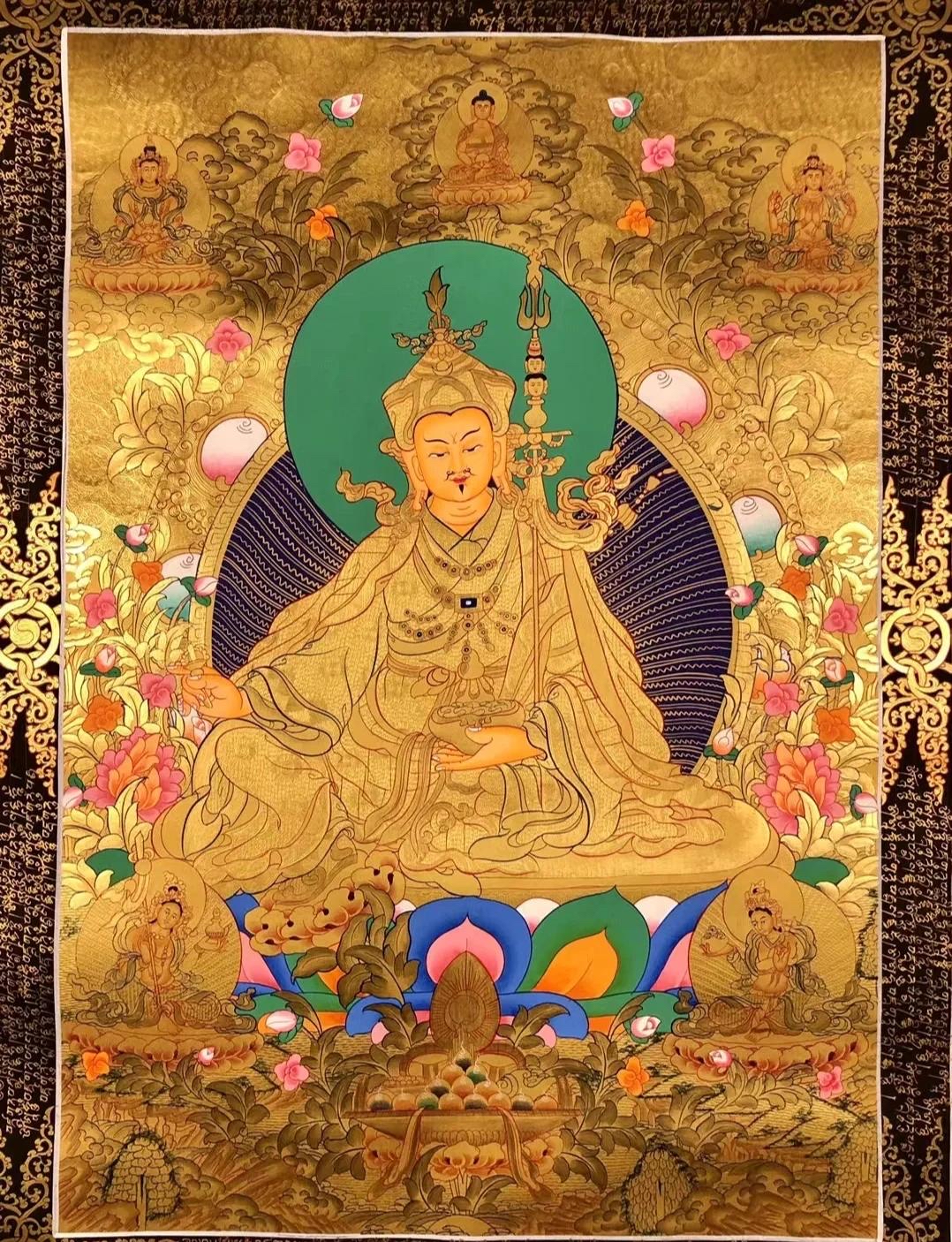
Iconographic thangkas primarily depict single, paired, tripartite, or multiple combinations of deities such as Buddhas, Bodhisattvas, Female Venerables (Buddha Mothers), Arhats, Dharmapalas, Vajras, Heavenly Kings, Tara, Heavenly Mothers, Tsampo Kings, Sect founders, Dharma Kings, Eminent monks, Great accomplished masters, Translators, and Sages. These works chiefly extol their virtues or accomplishments.
Biographical Thangka
Biographical thangkas depict the lives of Buddhas, Tsampo kings, Sect founders, Successive Panchen Lamas, Eminent monks, Great masters, Translators, and Sages. They primarily employ single panels or sequences of dozens or even hundreds of panels to illustrate a continuous narrative.
Story Thangka
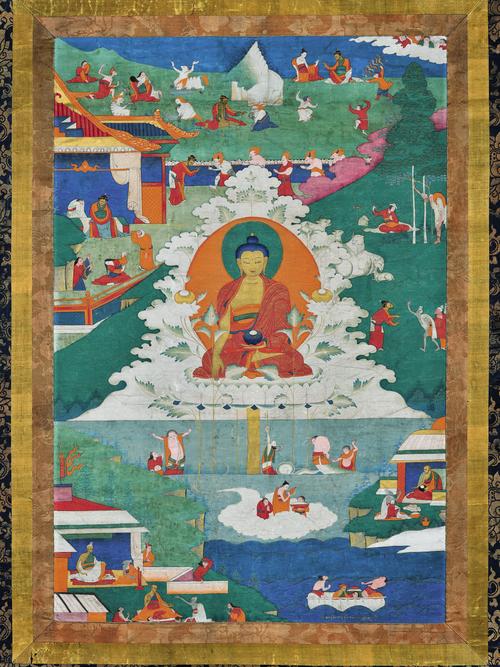
Story thangkas depict a complete historical narrative or mythological tale through single or multiple panels. For instance, the eleventh panel of the "Life of Shakyamuni" thangka series recounts key events in the Buddha's biography: his renunciation of worldly life, ascetic practices, subjugation of demons, and turning of the Dharma wheel. Shakyamuni Buddha occupies the central position, rendered with elegant form and radiating wisdom and compassionate beauty. Surrounding the central deity, the narrative unfolds gradually from left to right and top to bottom.
Mandala Thangka
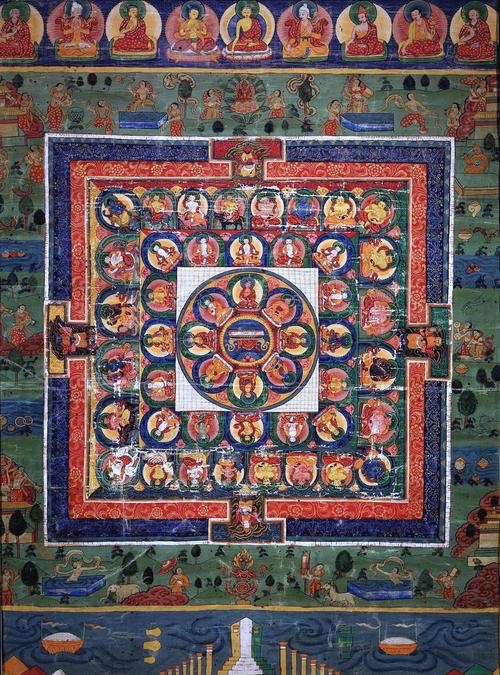
Mandala is a transliteration of the Sanskrit term, referring to the unique religious and cultural artifact of Tibetan Buddhism known as the mandala, which takes the form of a circular pattern with a square center.These thangkas are displayed during the practice of esoteric Buddhist rituals in Tibetan Buddhism and serve as religious implements.
Knowledge Thangka
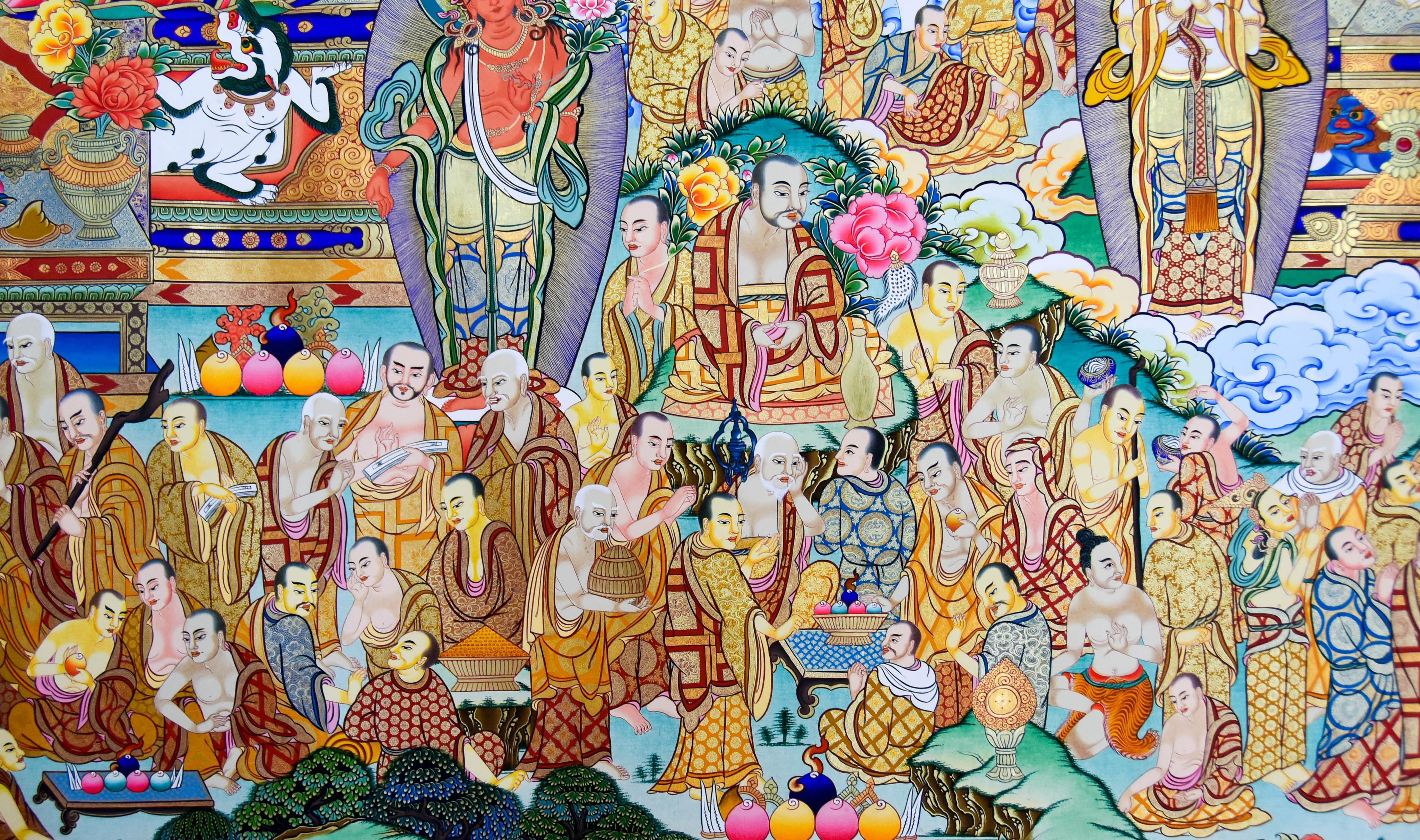
Knowledge thangkas are highly practical wall charts encompassing subjects such as medicine, astronomy and calendrical calculations, and ancient architecture. These Thangkas emerged as a unique artistic phenomenon alongside the advancement of Tibetan society and the flourishing of thangka art, reflecting both the expansion of thematic content and a shift toward practical applications.
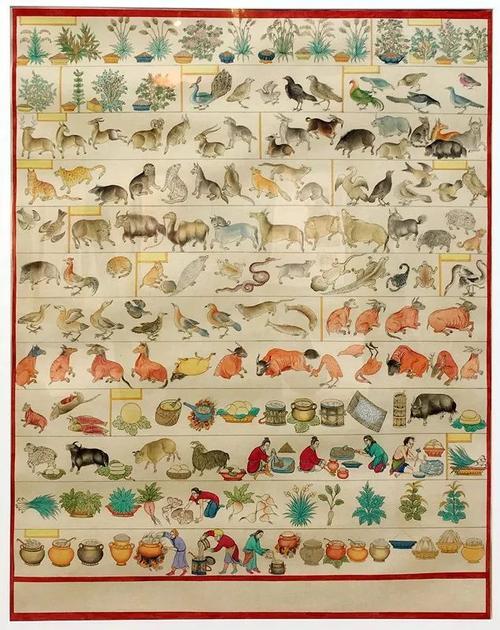
Beyond the Thangka categories listed above, other subjects include offering paintings, folk custom paintings, and sutra Thangkas. For instance, the Six Realms of Rebirth depicts the terrifying hell realms with a highly unusual and bizarre composition. Similarly, the Four Auspicious Symbols is based on a folk legend depicting an elephant, monkey, mountain hare, and phoenix living in harmony.





