The Nepalese School
The Nepalese School flourished primarily between the 11th and 13th centuries. When Songtsen Gampo married the Nepalese princess Bhrikuti, a number of skilled Nepalese artists accompanied her to Tibet. They integrated Nepalese artistic styles into the local Tibetan tradition, giving rise to the Nepalese school within Thangka painting.
This school is characterized by a dominant use of warm tones. The central deity occupies a prominent position in the composition, while protective deities are arranged in neat, small grids surrounding the main figure. The depictions are relatively simple, with figures appearing somewhat rigid, adorned in minimal and light garments, and jewelry rendered with a pronounced sense of weight.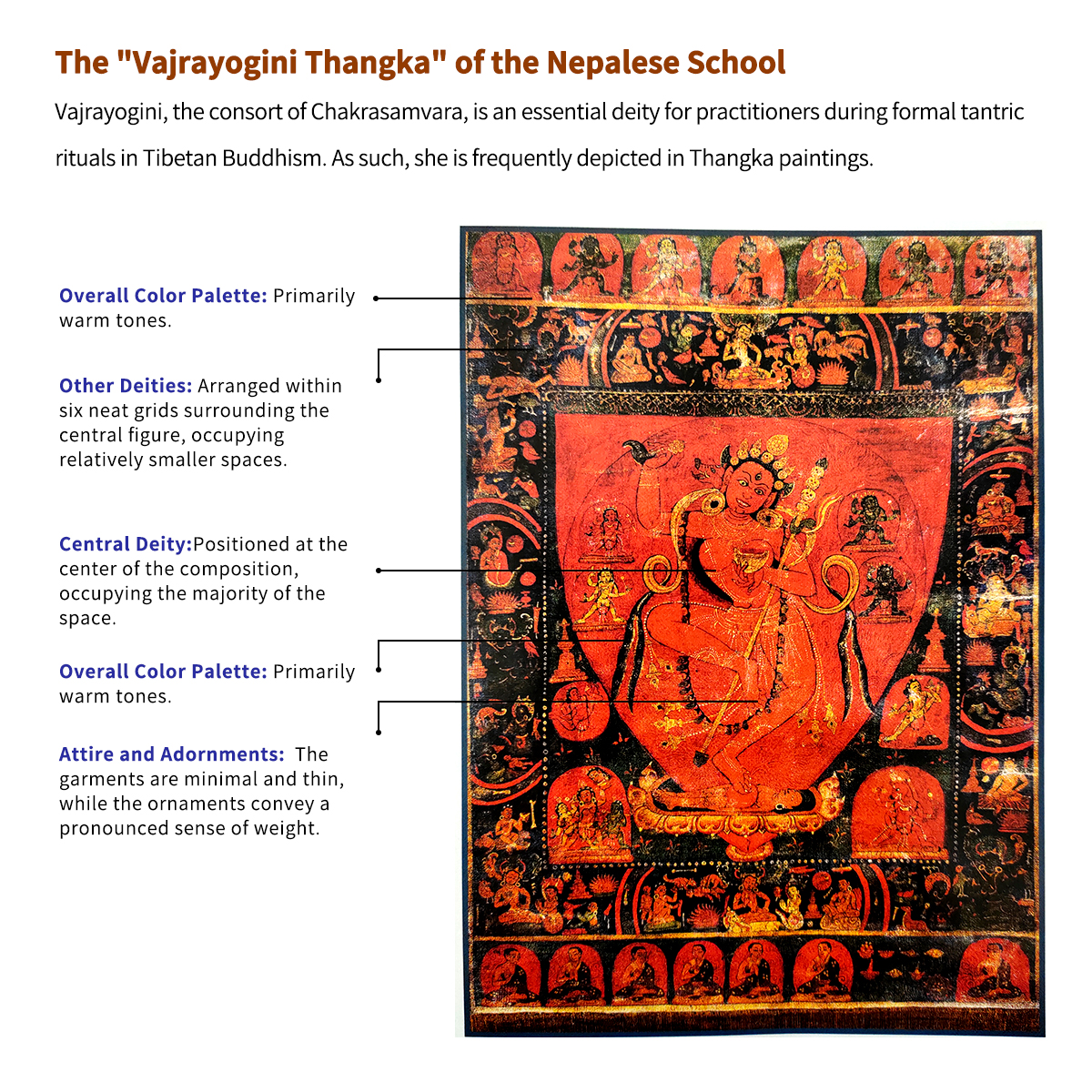
The Chigang School
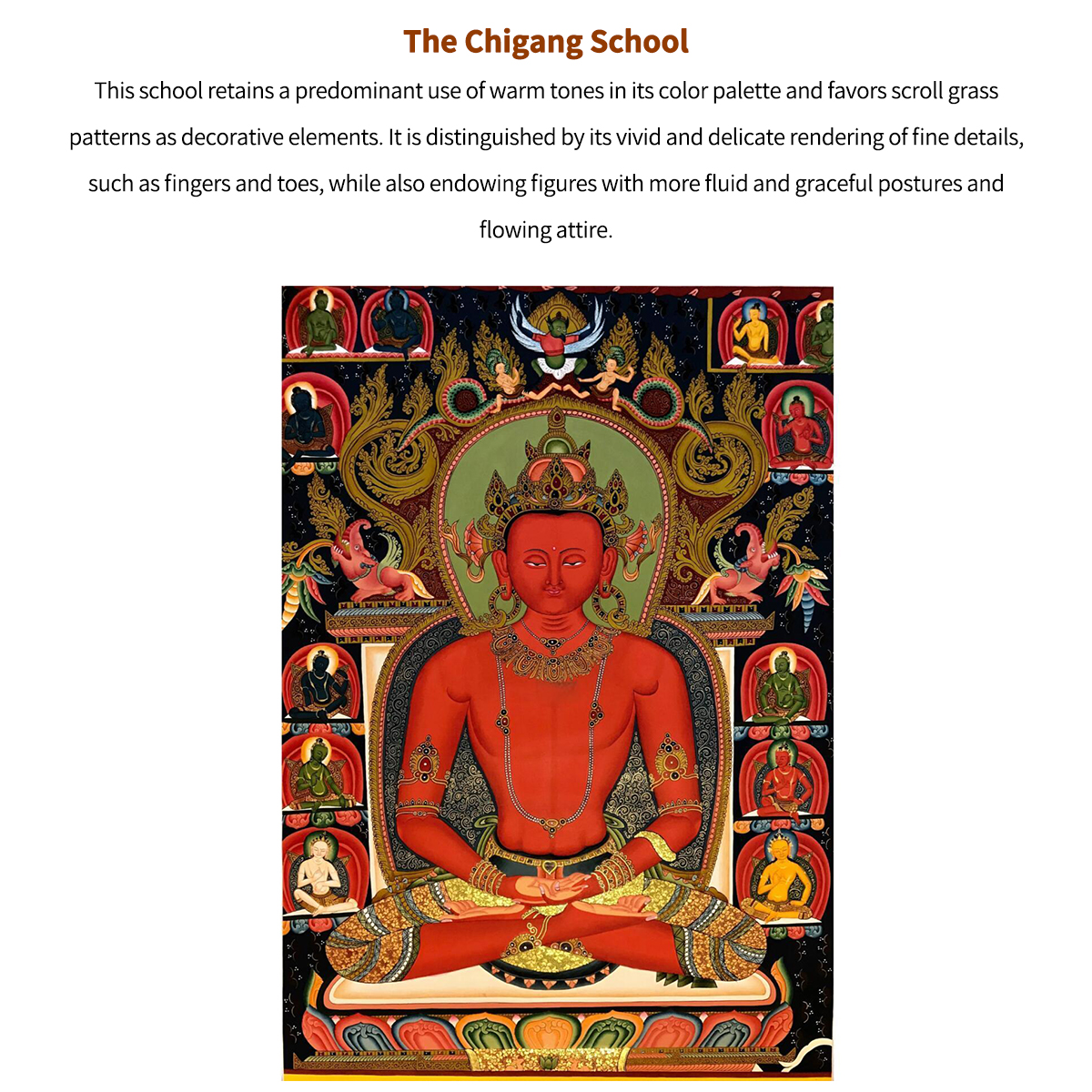
The Chigang School was founded by Yadui Chiwugangba, one of the most renowned painters in Tibetan history. This school flourished primarily in the U-Tsang region during the 13th century. It inherited the artistic essence of the Tibetan imperial and fragmented periods while also incorporating certain features of the Nepalese painting style.
In terms of composition, it largely followed the structure of the Nepalese school but introduced subtle modifications. The central deity occupies a comparatively smaller portion of the canvas, while warm tones continue to dominate the color palette. The background is often adorned with decorative scroll grass patterns. This school is noted for its more vivid and delicate depiction of details such as fingers and toes, as well as for rendering figures with more fluid and graceful postures and attire.
The Miantang School
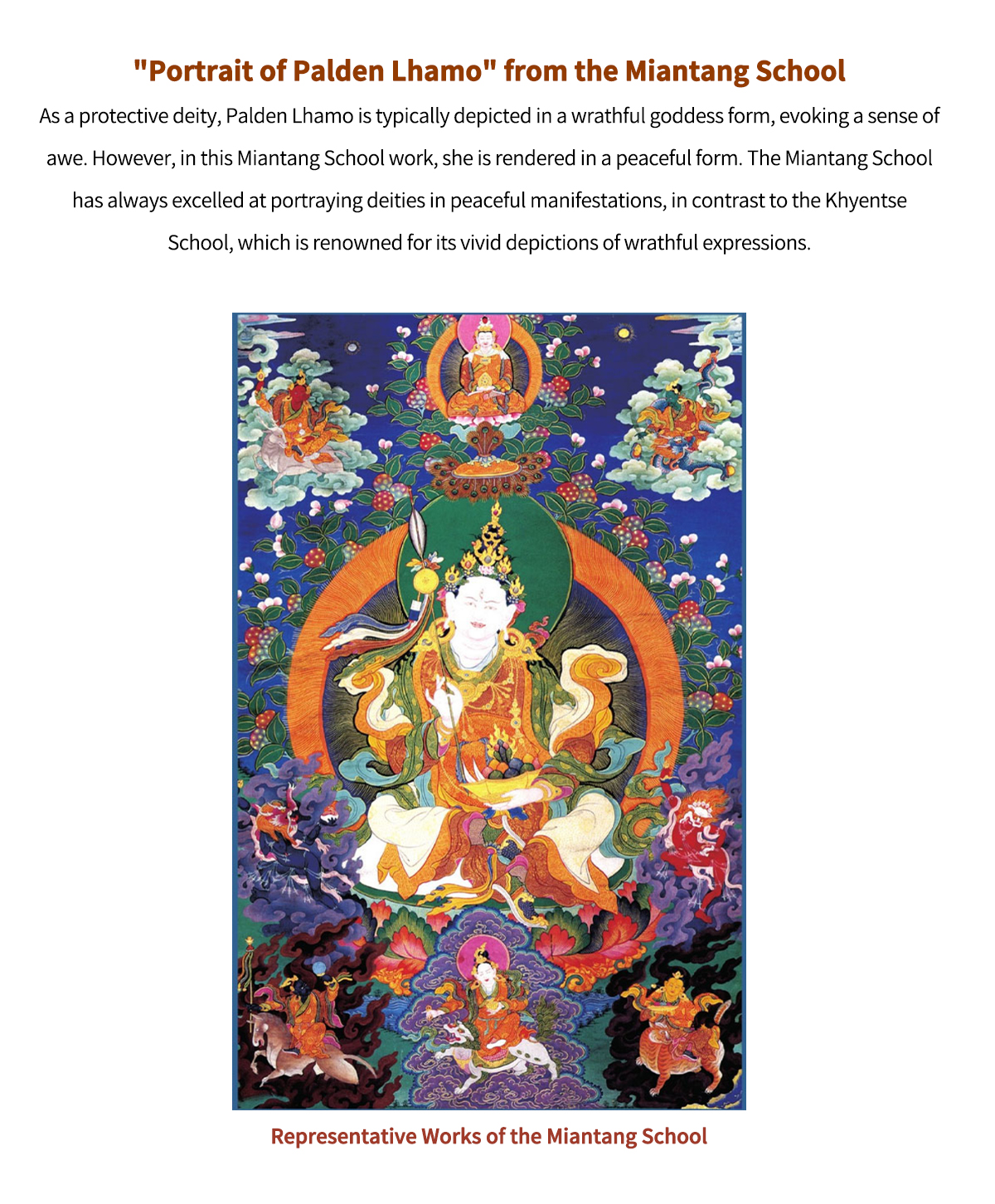
The Miantang School was founded by Menla Döndrup Gyatso, who was born in Lhodrak Miantang (present-day Shannan Prefecture). Hence, the painting tradition he established became known as the Miantang School. To distinguish it from the later New Miantang School, it is also referred to as the "Old Miantang (Mianning)" style.
This school flourished primarily in the U-Tsang region and emerged as the most influential painting tradition after the 15th century. Its artistic characteristics include incorporating elements of Chinese landscape painting, such as green mountains and flowing water, into the background behind the central deity. The iconometric rules are more rigorous, with particular emphasis on the use of lines. The color palette tends to be more vibrant and lively, and the compositional layout is dynamic and varied.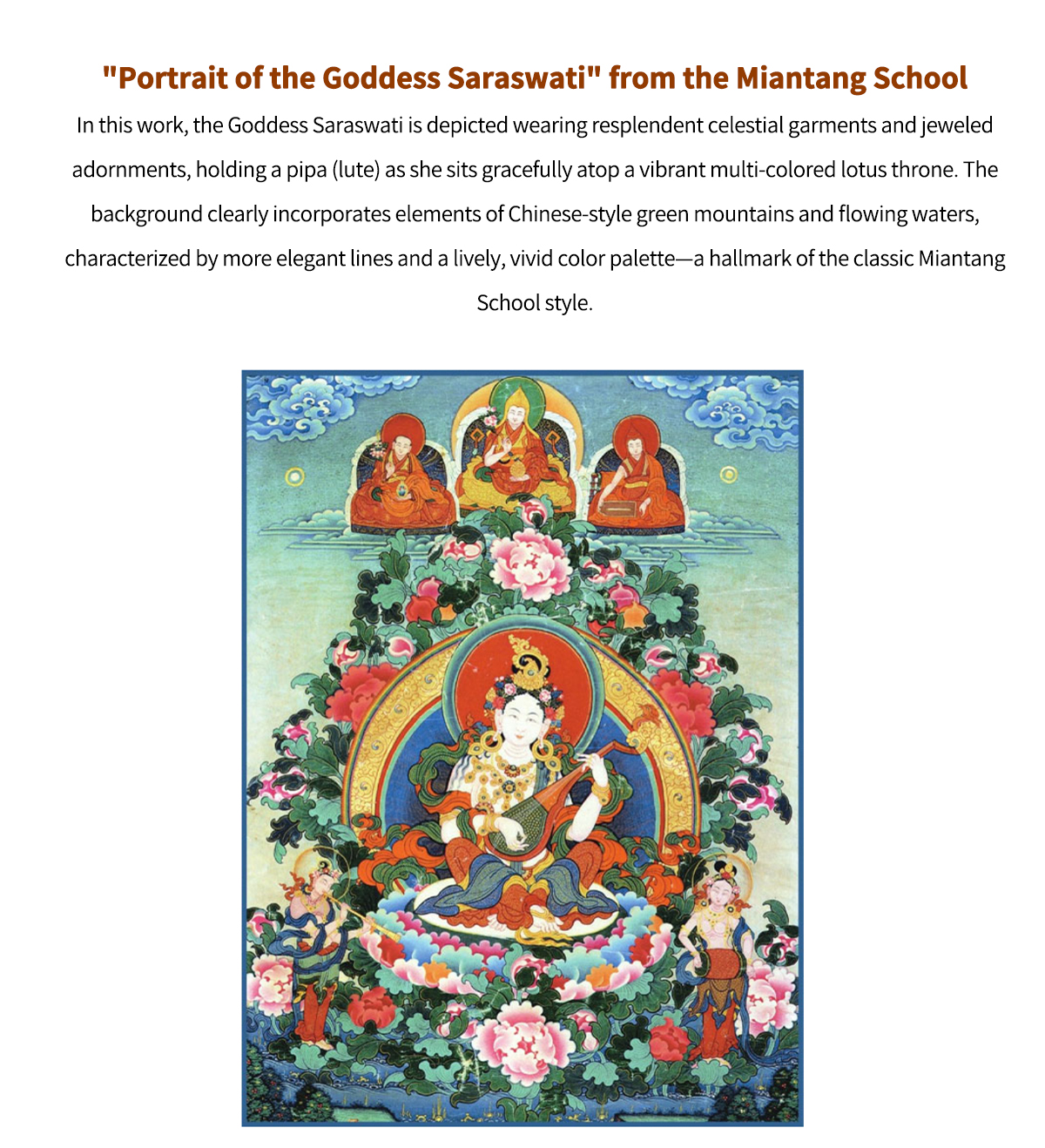
The Achievements of Menla Dondrup GyatsoMenla Döndrup Gyatso studied under the master painter Dopa Tashi in the Sakya region, dedicating himself to diligent practice and attaining profound expertise in the art of painting. Based on the Tantras, he authored the theoretical treatise The Wish-Fulfilling Gem of Iconometric Proportions, which systematically elaborates on the proportional measurements for painting and sculpture. The work expounds on the principles of measurement and techniques in Tibetan art, establishing itself as an essential text for later practitioners of the Miantang tradition.