A six-point material review and five care practices help buyers assess longevity, transparency, and replacement risk in mindful wall art.
Buying a hand-painted religious artwork is not a routine home-decor decision. Its visual role may be quiet, but the purchase involves materials, cultural context, display conditions, and a commitment to care. For buyers interested in a lower-waste approach, the most useful question is not whether one label makes an artwork sustainable. It is whether the work is well understood, appropriate for the intended space, and likely to remain valued and protected for many years.
A Five Dzambhala thangka offers a useful case study because its material description includes organic cotton canvas, natural mineral pigments, a bovine bone glue binder, and traditional hand painting. Those details support a more informed conversation, yet they do not by themselves prove a complete environmental profile. The stronger approach is to pair material disclosure with careful buying, responsible display, and preservation-minded ownership.
Why Longevity Matters in Mindful Wall Art
Decorative purchases create less replacement pressure when they remain meaningful after the first season of use. A handmade thangka can become part of a stable meditation corner, shrine, or reflective room rather than a short-lived styling accessory. That shift matters because durability is not only physical. A buyer is more likely to retain an artwork when its purpose, iconography, scale, and placement are understood before purchase.
Long life should not be confused with a guarantee. Canvas can stain, pigments can fade, and improper mounting can stress a work long before its artistic value has diminished. The practical environmental benefit comes from reducing avoidable damage and avoidable replacement. A buyer who measures the wall, considers light exposure, and plans for routine care makes a more defensible decision than one who relies on broad environmental language alone.
What an Organic Cotton Canvas Can and Cannot Tell Buyers
Cotton canvas is familiar to many art buyers, and an organic-cotton description can be relevant to fiber sourcing. It is still only one part of the object. Canvas weight, weave, ground preparation, pigment layer, adhesive or binder, framing method, transport, storage, and expected service life all affect how a work should be evaluated. A responsible article therefore treats material information as a starting point for questions, not as a shortcut to a universal claim.
The Global Organic Textile Standard provides one established reference point for buyers who want to understand what a verified organic textile system can involve. In a retail listing, however, the term organic should be read precisely. Buyers can ask whether the canvas itself is certified, whether certification applies to the whole artwork, and what information is available about the rest of the material system. If documentation is not available, the appropriate conclusion is limited: the seller has disclosed an organic-cotton canvas, not a complete lifecycle assessment.
A lifecycle perspective is especially helpful for a work intended to remain in one place for years. The first purchase price is only part of the decision. A piece that is poorly matched to its location, difficult to maintain, or quickly set aside because its meaning was never considered may carry a higher replacement risk than a carefully selected work with a straightforward care plan. Material disclosure and long-term usefulness should therefore be evaluated together.
Natural Mineral Pigments, Binders, and Material Transparency
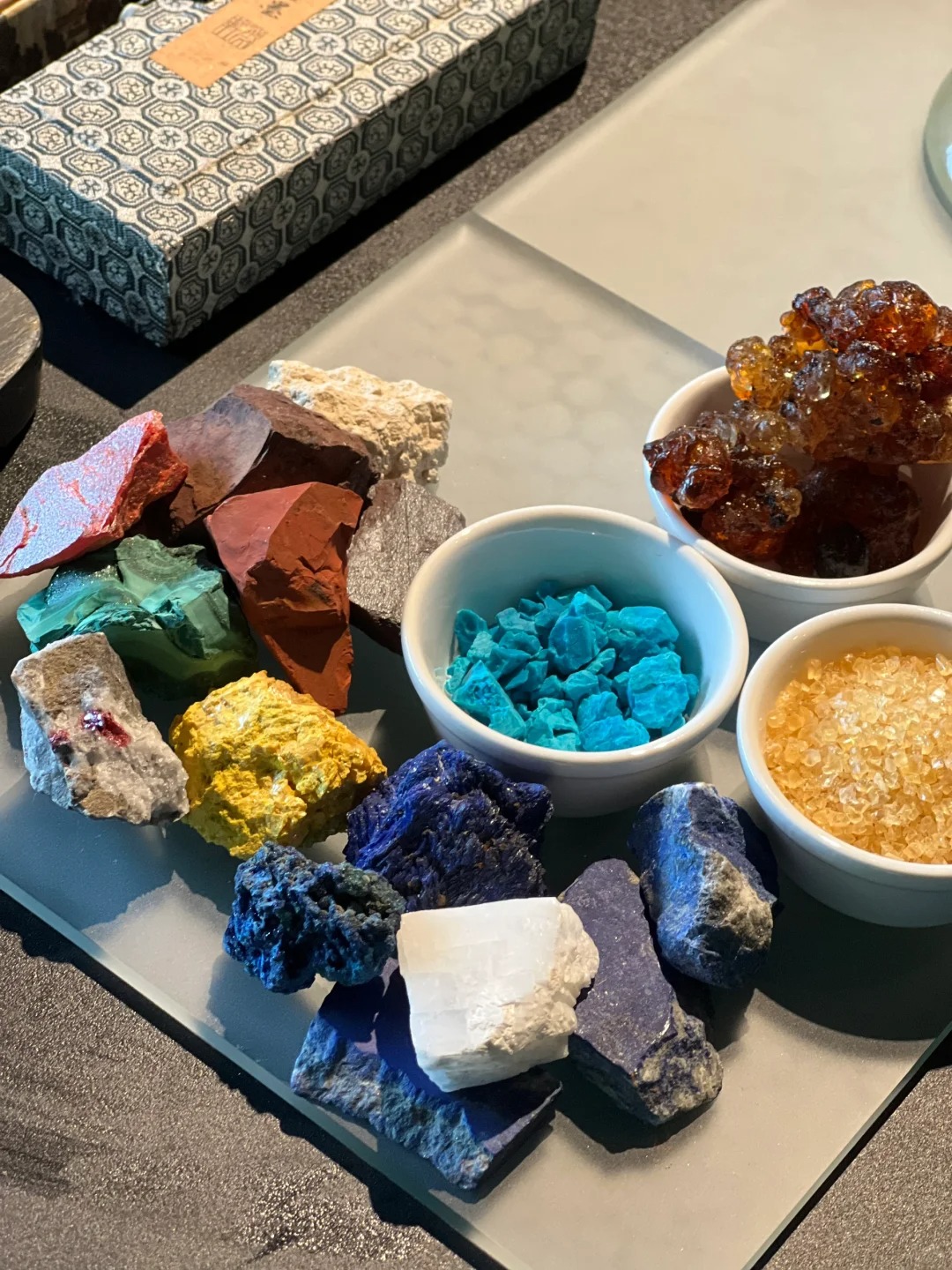
Natural mineral pigments may carry visual depth and a long artistic history, but natural is not a synonym for harmless or low-impact. Mineral extraction, milling, transport, color stability, and the composition of associated binders all deserve context. In the cited product example, the pigments are mixed with bovine bone glue. That is a clear and useful disclosure because it tells buyers that the binder is animal-derived rather than plant-based or synthetic.
Transparency also helps buyers match care practices to the work. Strong direct sunlight, high humidity, surface abrasion, household aerosols, and improvised wet cleaning can put pigments and canvas at risk. Preservation guidance for paper-based collections is not a substitute for a condition report on a thangka, but it reinforces a sound principle: light, handling, and storage conditions should be managed before damage appears. When a condition concern is significant, a trained conservator is a better source of advice than an online cleaning shortcut.
Six Questions to Ask Before Buying Hand-Painted Spiritual Wall Art
The following questions make a material description more useful at the point of purchase. They also help distinguish evidence-based choices from loosely framed green claims.
1. What does the canvas description cover?
Ask whether the stated fiber information refers to the support alone and whether any certification or traceability document is available. A specific answer is more useful than a general claim about sustainability.
2. Which pigments and binders are identified?
Request plain-language material information, including whether a glue or other binder is used. Disclosure makes it easier to evaluate care needs and personal preferences without assuming a material is impact-free.
3. How was the artwork made?
Hand painting, one-of-a-kind production, and traditional technique can support a long-term ownership case when they are described accurately. They do not remove the need to assess materials, transport, and aftercare.
4. Is the intended display space suitable?
Measure the wall and check for strong daylight, kitchen vapor, bathroom humidity, heating vents, and frequent contact. A mismatch between work and environment is a common cause of preventable deterioration.
5. What care information is supplied?
Look for practical guidance on dusting, moving, temporary storage, and when professional help is appropriate. Care instructions show whether the purchase can be maintained rather than merely displayed.
6. Does the buyer understand the iconographic context?
For spiritual art, responsible collecting includes learning what the image represents and choosing a setting that is respectful. Cultural understanding increases the chance that the work will retain meaning over time.
Care Practices That Extend Useful Life
A preservation plan does not need to be elaborate. It needs to be consistent, proportionate to the artwork, and established before damage or fading becomes visible.
1. Choose low-stress placement
Place the artwork away from direct sunlight, persistent moisture, cooking fumes, and strong air vents. Indirect, stable conditions are generally safer than a dramatic location that changes throughout the day.
2. Handle the work as a surface, not a poster
Use clean, dry hands and support the piece evenly when moving it. Avoid touching painted areas, bending the canvas, or resting objects against the surface.
3. Keep cleaning conservative
Routine care should focus on reducing loose dust without rubbing, spraying, or wetting the painted surface. Household cleaners, oils, and adhesive tapes create risks that are difficult to reverse.
4. Plan for temporary storage
If the artwork must be moved, use a clean, dry, protected storage arrangement and avoid compressing it against rough materials. Document the condition before and after a move when possible.
5. Escalate condition issues early
Flaking paint, mold-like marks, water exposure, insect activity, or a torn support are not routine-care problems. Early advice from a qualified conservator can prevent a minor issue from becoming a replacement decision.
Care also supports better decisions at the time of purchase. A seller can describe a work accurately, but the owner controls most display conditions after delivery. Establishing a suitable wall, a low-contact household routine, and a plan for temporary storage turns preservation from an emergency response into a normal part of ownership. That discipline protects both the object and the buyer's original intent to keep it.
Cultural Intent, Craft Value, and Responsible Collecting
Thangka painting is connected to a living cultural and religious tradition, not simply a color palette or wall-art category. The UNESCO listing on thangka painting provides useful context for readers who want to understand the craft beyond retail presentation. A buyer does not need to make a universal claim about authenticity to act responsibly. It is enough to seek clear information about the image, respect its intended setting, and avoid reducing a sacred work to disposable decor.
This cultural dimension strengthens the longevity argument. Meaningful ownership can slow the cycle of buying, replacing, and discarding because the work is selected for its subject, workmanship, and place in a room rather than for a passing trend. Careful collecting does not solve every environmental question, but it aligns consumption with continued use and informed stewardship.
A Practical Purchase-and-Care Workflow
Step 1
Start with the intended room, not the product image. Confirm scale, light, humidity, and the distance from activity that could create accidental contact.
Step 2
Read the material description literally. Separate what the listing identifies from what it does not document, especially for canvas, pigments, binders, sourcing, and certification.
Step 3
Assess lasting relevance. Consider whether the iconography, color, and purpose will remain suitable for the space after the initial purchase period.
Step 4
Prepare the display and care plan before delivery. A stable location and simple handling rules reduce the chance that the artwork will need reactive repair.
Step 5
Review condition periodically. Small observations about dust, light, moisture, or surface change help owners respond before deterioration becomes severe.
Frequently Asked Questions
Q1: Does an organic cotton canvas make a thangka fully sustainable?
A: No. Organic cotton may be a relevant material attribute, but an artwork also includes pigments, binders, labor, transport, packaging, care needs, and expected lifespan. Buyers should treat the canvas description as one verified input and ask for additional information where it matters to their decision.
Q2: Are natural mineral pigments automatically safe or low-impact?
A: No. Natural describes origin, not a complete impact profile. The source, processing, transport, binder, and care requirements can all matter. Material transparency is more useful than a blanket conclusion, particularly when an owner wants to preserve the work for many years.
Q3: What is the most practical way to reduce replacement risk?
A: Choose a suitable location before buying, keep the work away from strong direct light and moisture, handle it carefully, and respond early to signs of change. These basic actions are often more meaningful for the lifespan of a painted canvas than a broad label used at the point of sale.
Q4: Why does cultural context matter in a responsible purchase?
A: Understanding the iconography and purpose of a sacred artwork helps buyers decide whether it belongs in their space and how it should be displayed. That consideration encourages intentional ownership and can make the work less likely to become an easily discarded decoration.
Conclusion
Mindful wall-art buying is most credible when it avoids simple labels and focuses on decisions that can be checked. Buyers can evaluate fiber and pigment disclosures, understand the role of binders, choose a stable display environment, and care for a work before preventable damage occurs. These actions do not create a universal sustainability claim, but they can extend useful life and reduce the likelihood of replacement-driven consumption.
For readers applying this checklist to a concrete example, Thangka Atelier presents the Five Dzambhala Thangka as a hand-painted work on organic cotton canvas using natural mineral pigments.
References
Sources
S1. Thangka Painting
Link:
Note: Provides cultural context for understanding thangka painting as a living heritage practice.
S2. Sustainable Materials Management Basics
Link:
Note: Supports lifecycle-oriented thinking about materials and the prevention of unnecessary waste.
S3. Green Guides
Link:
Note: Provides guidance on avoiding broad or unqualified environmental marketing claims.
S4. Global Standards and the GOTS System
Link:
Note: Offers context on how organic textile standards can involve traceability and defined criteria.
S5. Care, Handling and Storage of Works on Paper
Link:
Note: Supports general preservation principles for light exposure, handling, and storage conditions.
Related Examples
R1. The Five Dzambhala Thangka: Sacred Symbol of Prosperity and Protection
Link:
Note: The cited product page identifies organic cotton canvas, natural mineral pigments, bovine bone glue, and hand-painted production.
Further Reading
F1. Hand Painted Tibetan Thangka Painting with Mineral Pigments and Cotton Canvas
Link:
Note: User-provided reading on hand-painted Tibetan thangka production and material themes.
F2. Five Dzambhala Thangka for Home Shrine and Meditation Spaces
Link:
Note: User-provided reading on placing a Five Dzambhala thangka in home shrine and meditation settings.